

Description
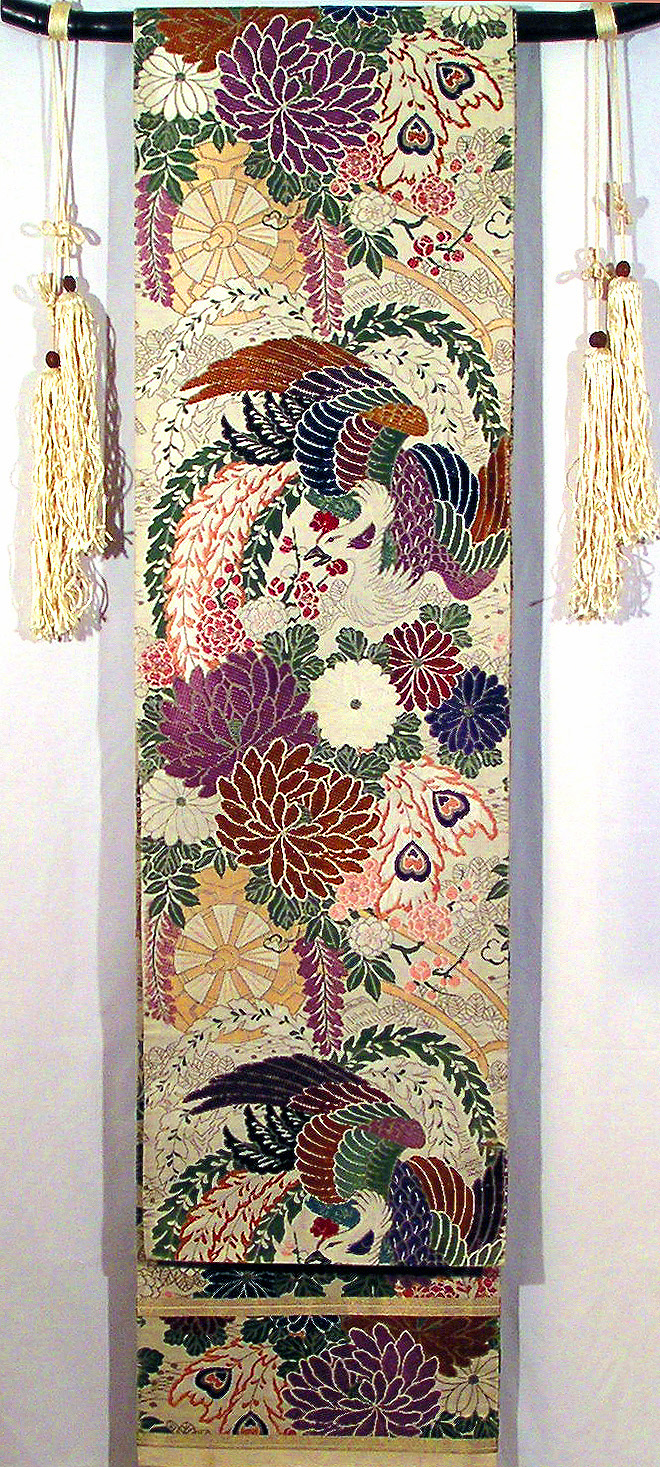
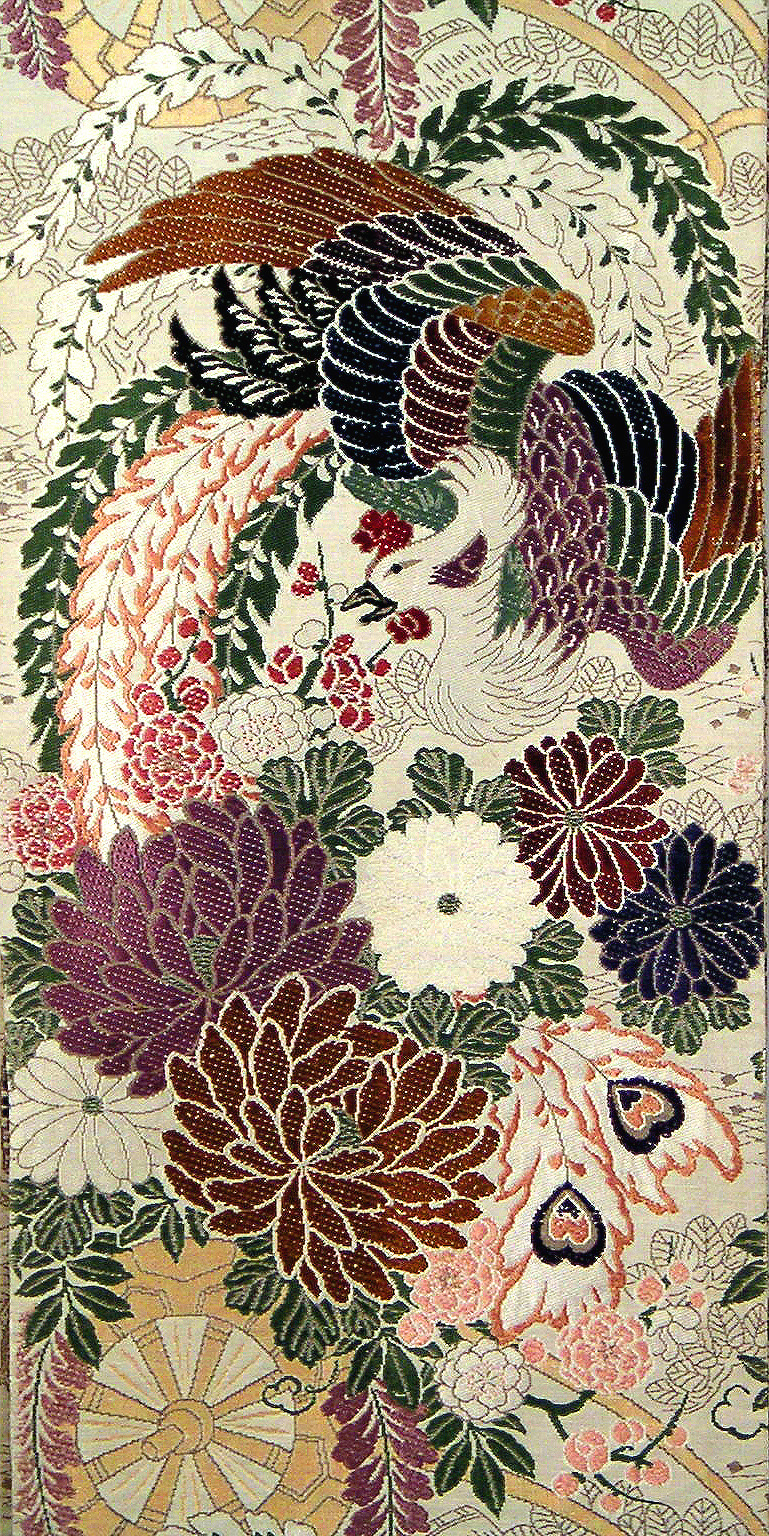
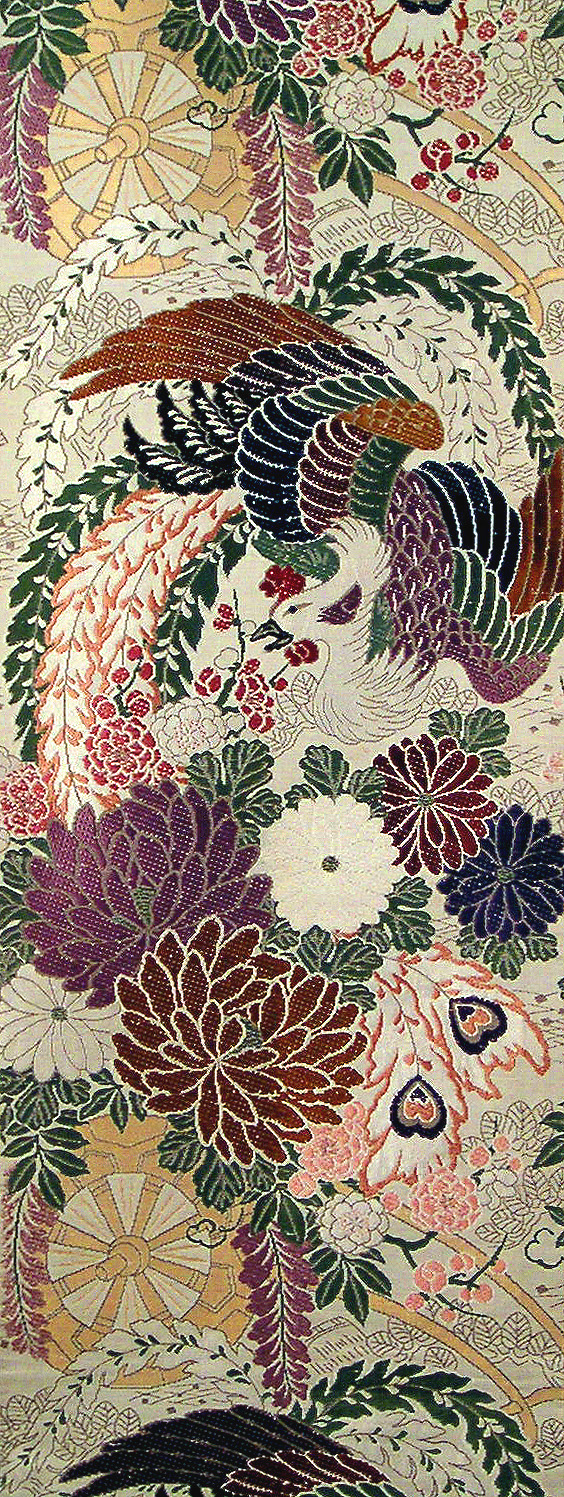
DESCRIPTION: This is an extraordinary example of the most elaborate of the “Maru” Obi to be hand woven for Japanese women in the 1800s. A Maru Obi is the most formal and expensive of the Silk Obi. It has but one seam, meaning that the Obi was woven in one continuous panel before being folded over in such a manner that the pattern was not lost in the fold. This exquisite Obi also includes very unusual and rare shades of pink and purple, as well as the seldom seen lapis, taken from natural dyes. In addition to the rich sheen of the Silk threads, the Master Weaver incorporated a tremendous amount of fine silk threads in such a manner as to make the total Obi appear to have been embroidered. It is an amazing tapestry.
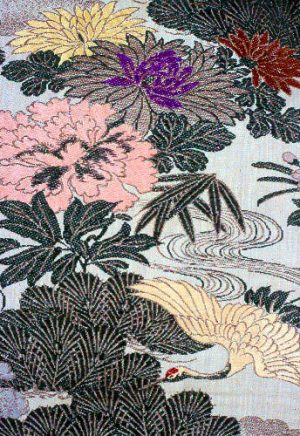
The design incorporates numerous motifs important to the Japanese culture and history. The brilliant Phoenix (“Hoo”) has strong associations with the Imperial Family, as legend has it that the mythical Phoenix appeared only when a virtuous ruler was to be born. The Phoenix is encircled by Wisteria (“Fuji”), often associated with the aristocratic Fujiwara Family and the Kumano Shrine; clusters of Chrysanthemum flowers (“Kiku”), the flower of the Imperial Family; Peonies (“Botan”) regarded as a symbol of good fortune, high honor, and Spring; and by Peacock Feathers which were one of the emblems of the early Japanese Rulers. Separating each of these powerful images are the wheels of the traditional Carriage or Flower Cart (“Genji Guruma”) of the nobility.
It would have taken a Master Weaver to create such a magnificent Obi with its intricate design and brilliant dye work. The variations of purple (“Murasaki”), the color of the Imperial Family, and the unusual and striking shades of blue, attest to the skill of the weaver, while the Pure Gold stripes at the bottom of the Obi denote that a woman of nobility and wealth in Japanese society wore this stunning Obi.
TTAC will personally pack and ship via UPS at company expense within the continental United States.