

Description
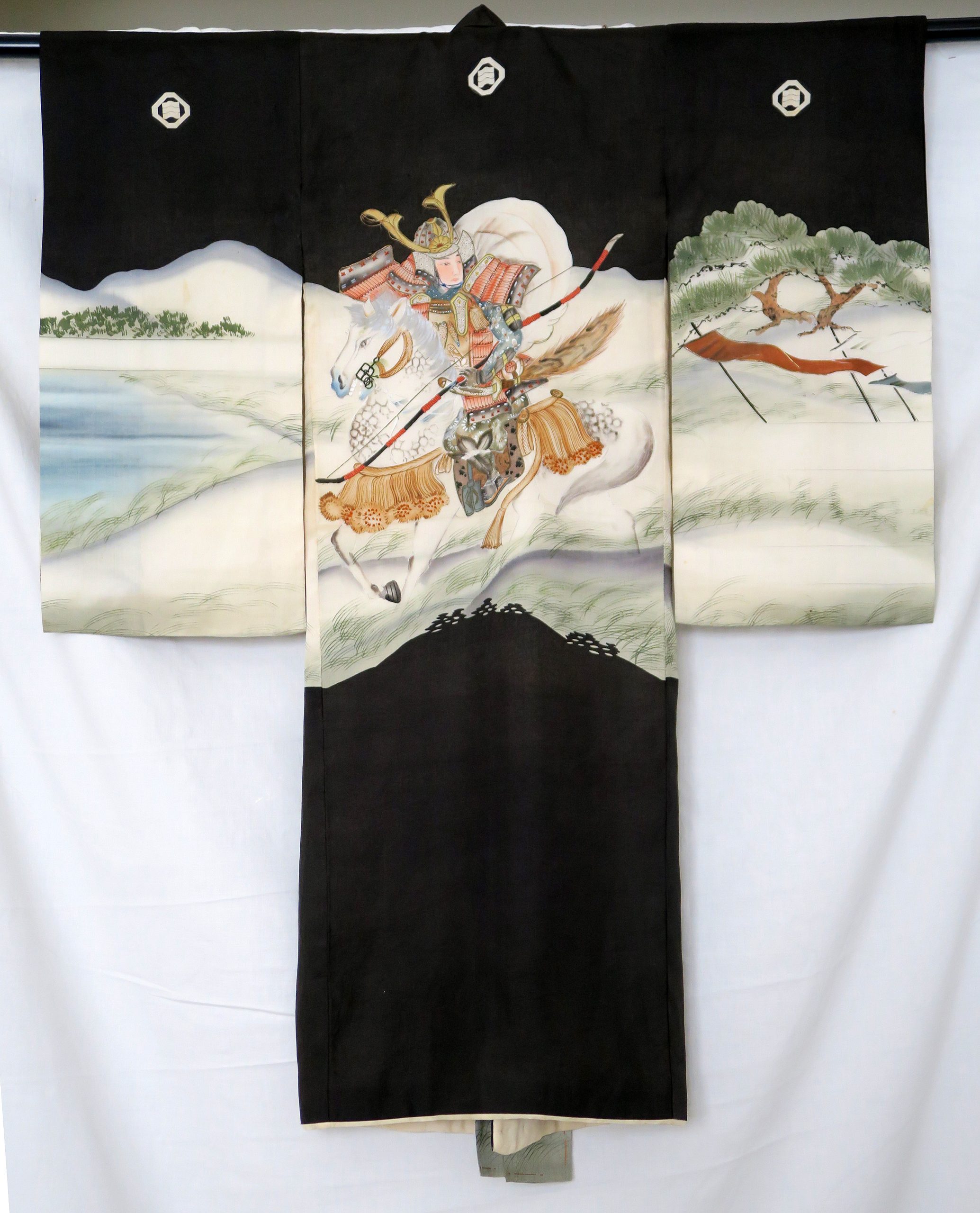
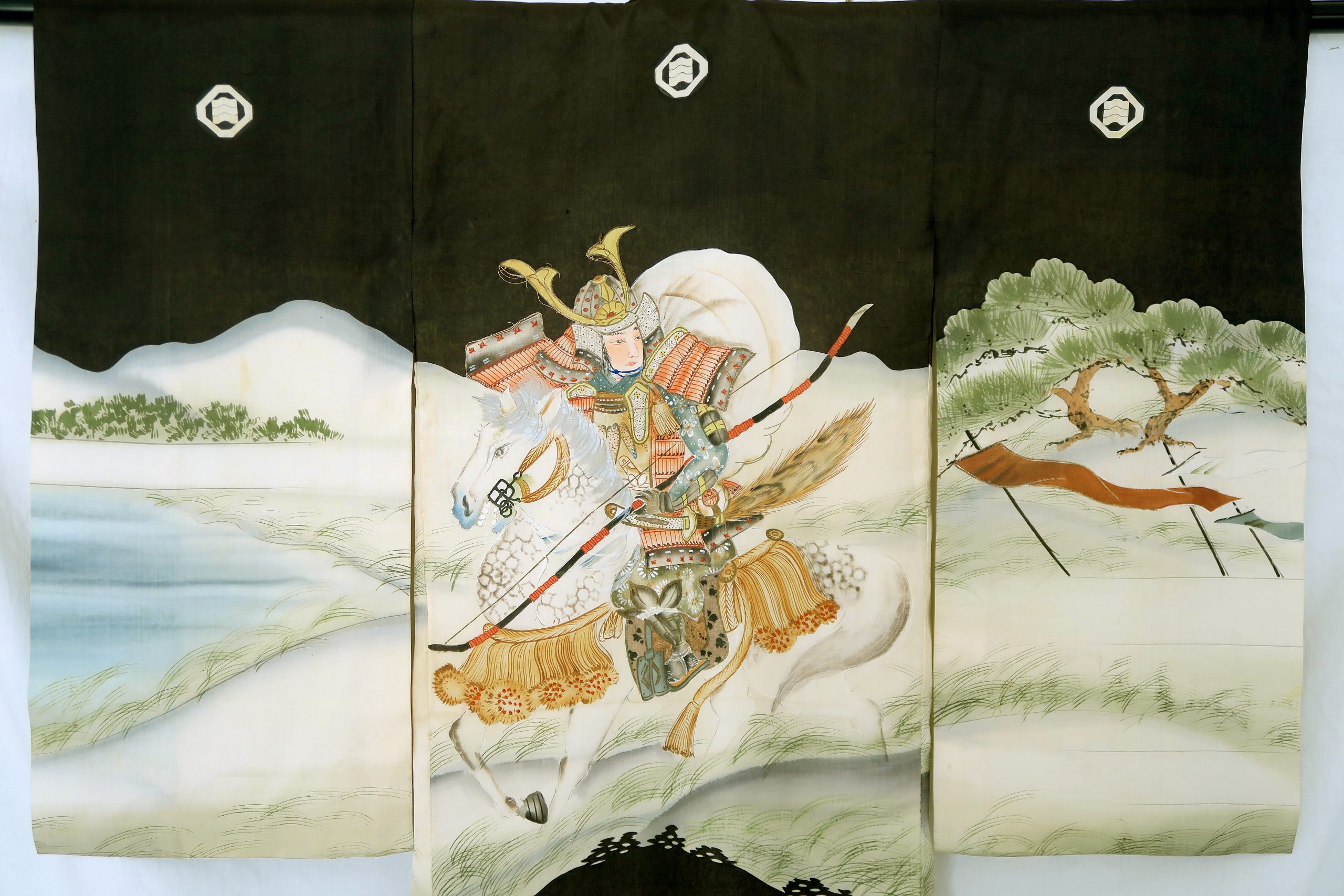
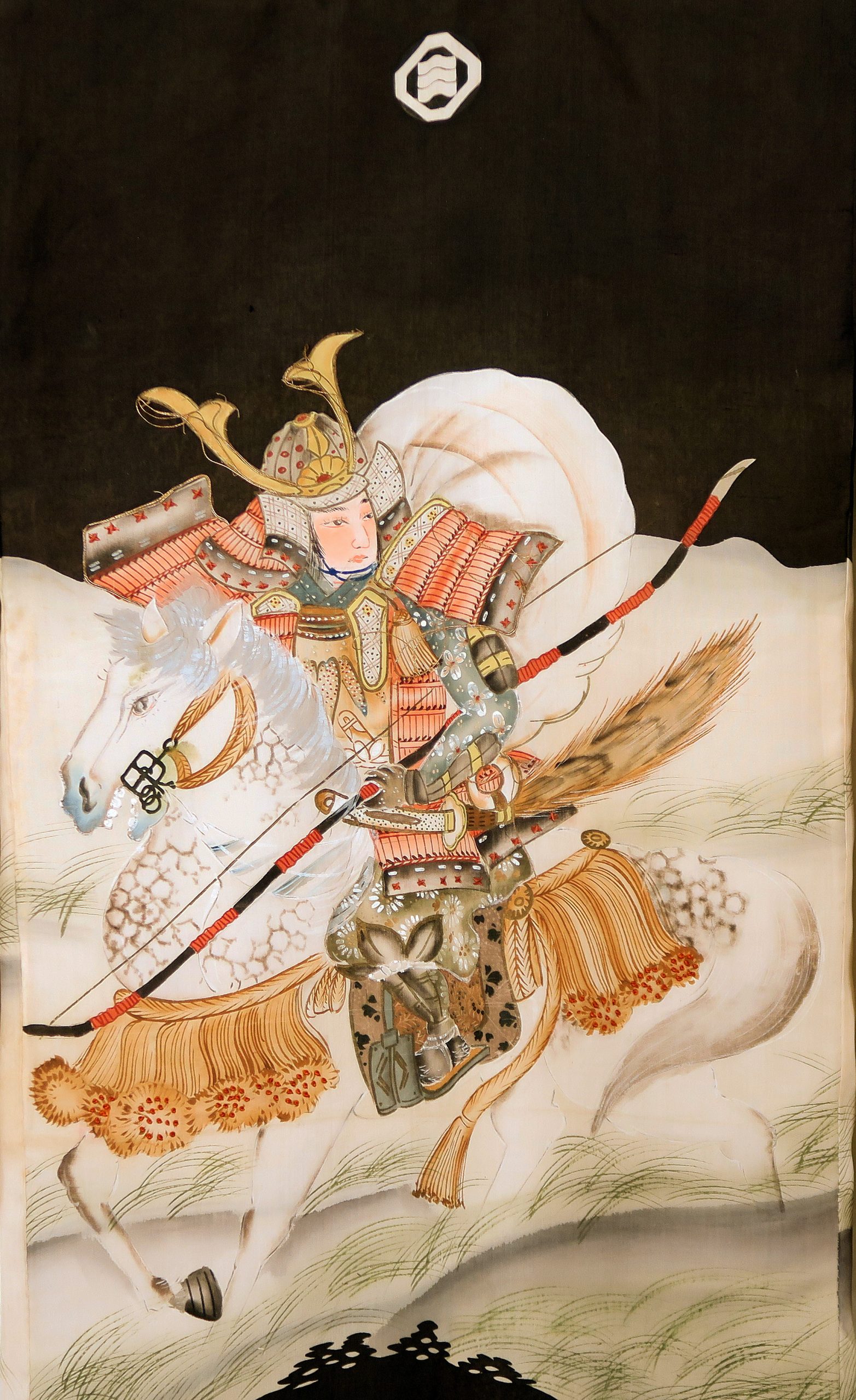
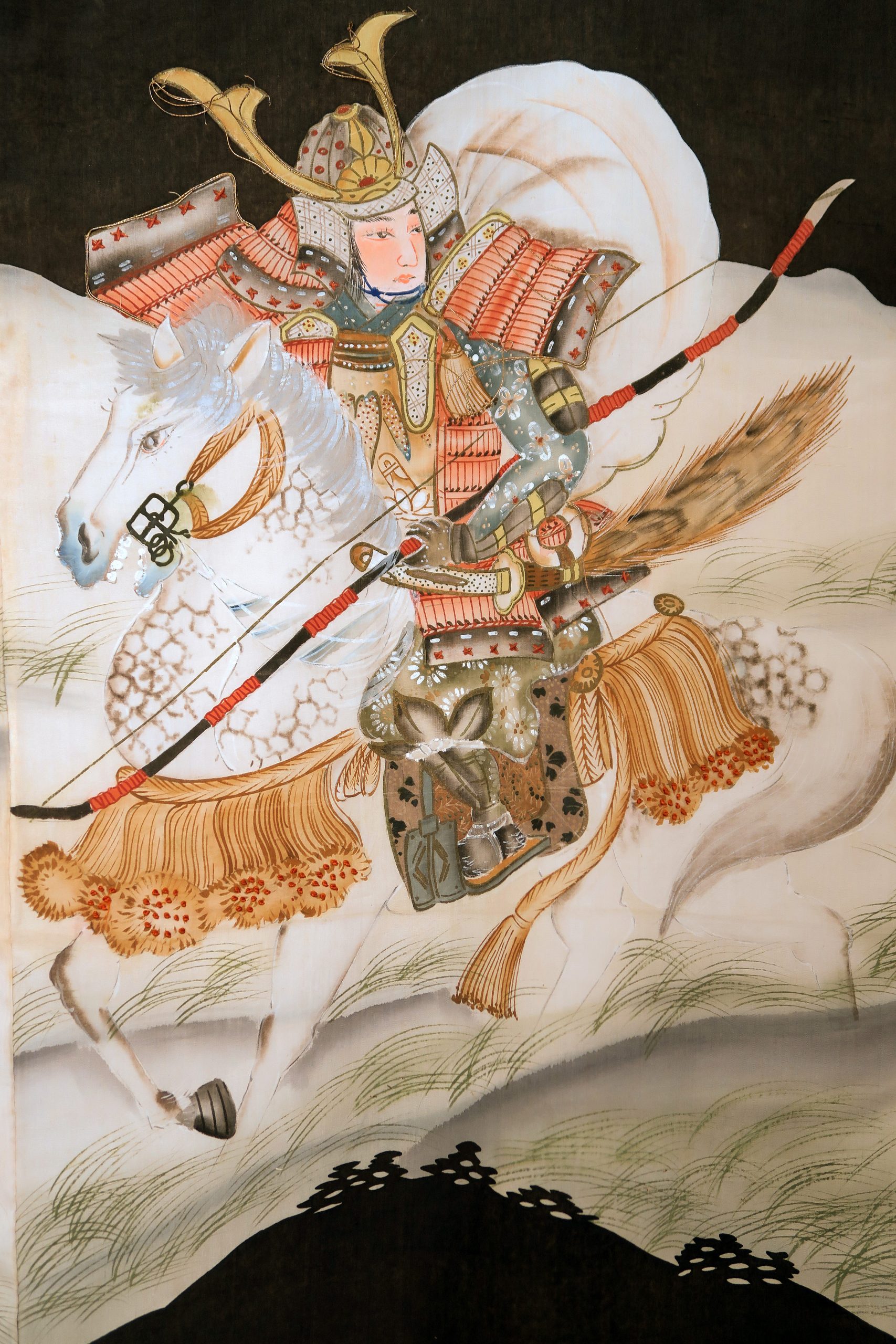
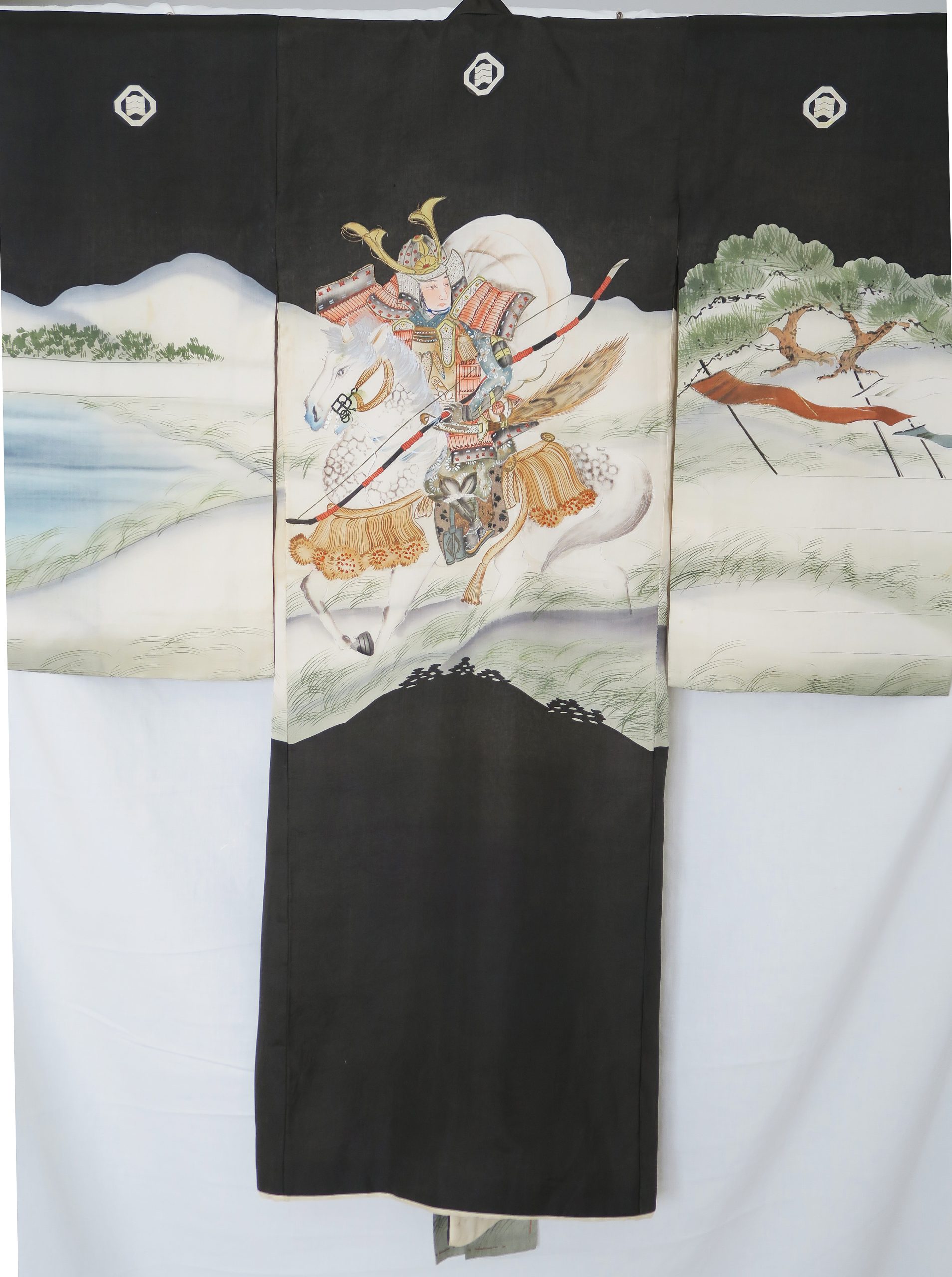
This marvelous handwoven Silk Boy’s Kimono was intended to be worn for Boys Day (the 5th day of the 5th month of the year) by a young boy of noble standing. This “one in a million” design of an elaborately costumed Samurai Warrior has been hand painted using the “Rice Paste Resist” or “Tsutsugaki” method, then hand embroidered using pure gold threads that have been “Couched” onto the fabric.
The word “Samurai” comes from “Saburau” meaning to serve. It was enlarged from a pure military context to include an equal measure of soldier, administrator, and poet. The virtues of the ultimate Samurai also included the contemplative arts of the theatre, the tea ceremony and literature. The dark brown color of the Kimono represents the strength of the earth and came from “Chairo” or tea color at a time when tea was restricted to the privileged classes. The design on the sleeves includes the Pine Tree (“Matsu”) which symbolizes long life; and the Bamboo (“Take”) which has been prized for its strength, flexibility and good fortune.
The long silk embroidery threads hanging down from the Samurai are referred to as “Good Luck Threads” and are placed on the Kimono by the boy’s mother. They are also referred to as a “backguard,” while the crossed threads on the front serve this same purpose. These protective threads symbolically provide a means for the parents to grasp their son and pull him to safety. In addition to the defensive imagery, the patterns for the stitching down the back also determine that this kimono was for a boy; as the straight line of paired dots and stitches, as well as the diagonal line that runs to the left, instead of the right, reveals.
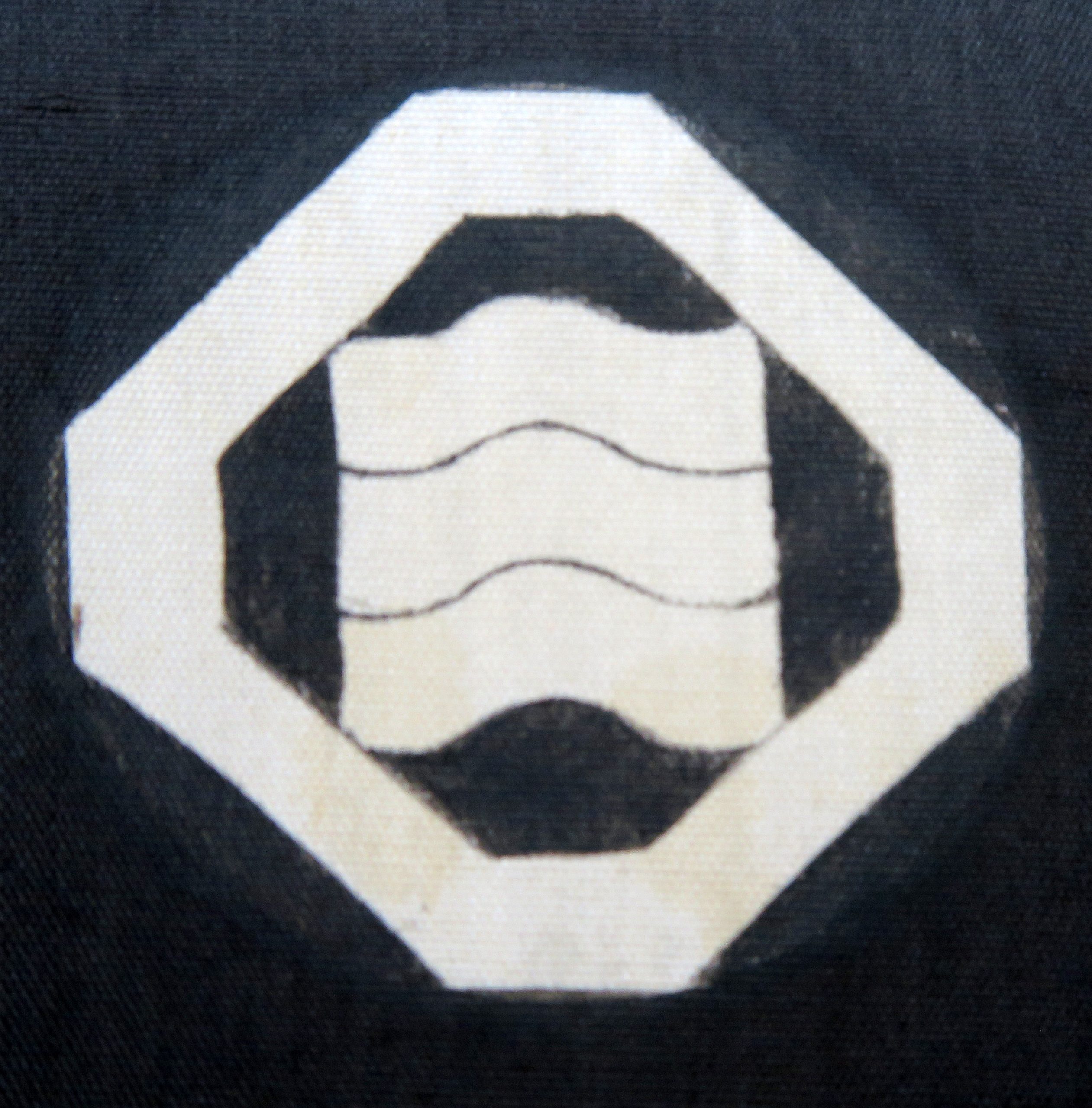
The significance of the Samurai design for the youth is further reinforced by the Family Crest (“Mon”). It is that of the Water Plantain (“Omodaka”) which was displayed by warriors on their robes and armor in the feudal period, even before the widespread adoption of family crests in Japan. The plant’s alternate name is “Shogunsu” or victory plant, adding even more emphasis to the symbolism. The crest appears 5 times on the shoulders and back of the garment and indicates that it was intended to be worn by a young boy of Samurai birth for formal occasions.
The original Silk was hand woven, hand dyed, hand painted and embroidered. The Rice Paste Resist technique of hand painting requires that each color be applied separately, while all the others are painted out in the rice paste. Each time a new color was added, the rice paste had to be removed by soaking it out over and over again in the local river water, Painting liquid gold on rice paper and then wrapping it around silk threads made the pure gold thread; which, because it was so fragile could only be laid on top of the fabric and couched to it.