


Description
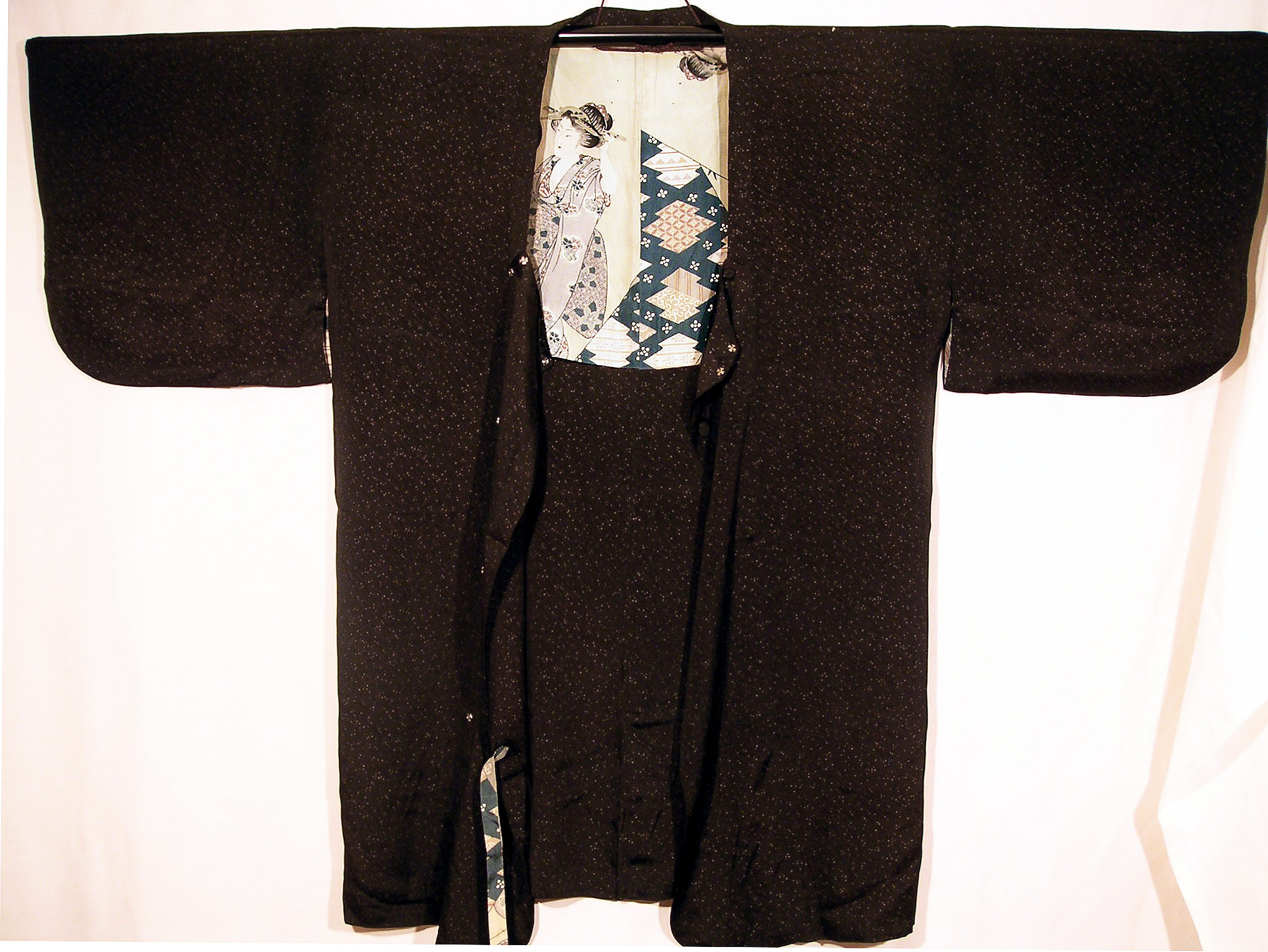
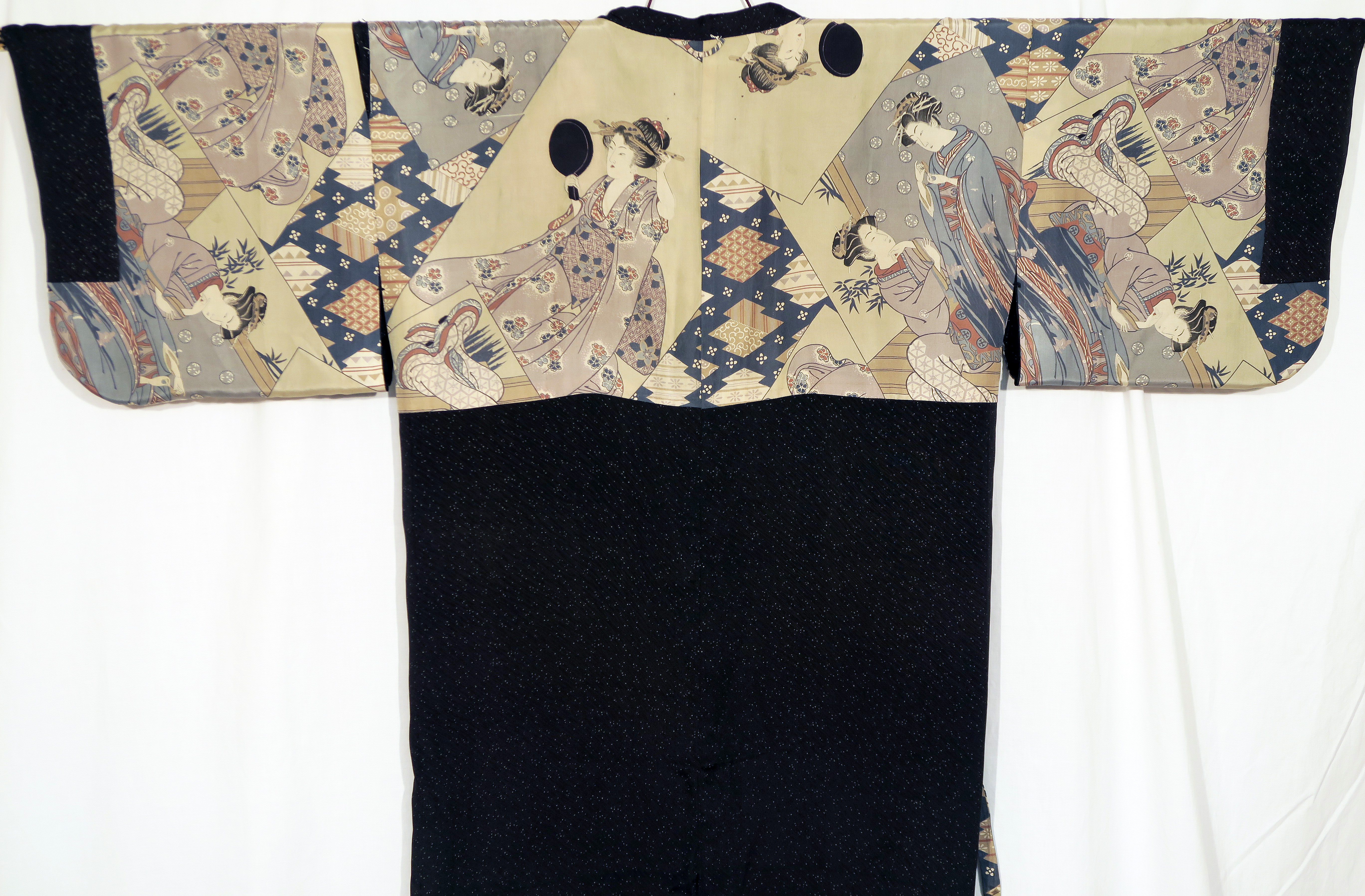
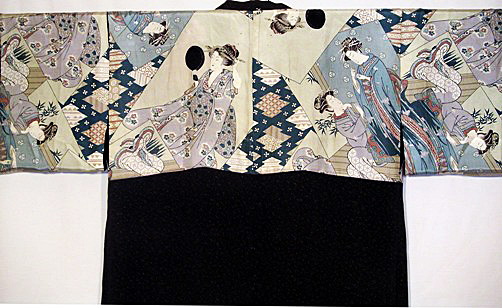
When in one’s own home, an informal Haori is worn by a woman of means, especially when it is composed of finely woven silk. This same garment could also be worn out for local errands by the lady of the house. In this example, the shape of the Haori or Michiyuki becomes more of what is considered a “housecoat” in the western sense. It has a square neckline, while the sleeves are three quarters in length and the front appears double breasted. The outer silk is black with all over dots (“bo tsubotsu”) in a mini repetitive pattern that is often referred to as “meiji jimon.” Often times the Michiyuki have no discernible pattern other than their designs are more subtle than those of most Kimono. In the Japanese scheme of things, size (“okisa”) makes a specific statement: a miniaturizing of things tends to enhance their desirability. This particular concept was a valued tradition in Japanese design from its earliest times.
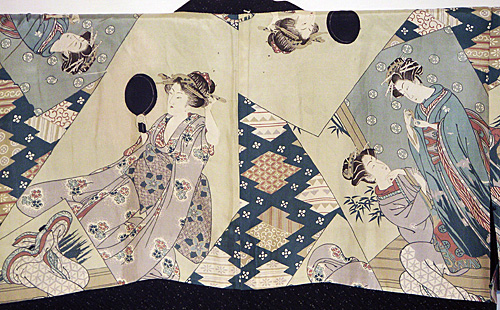
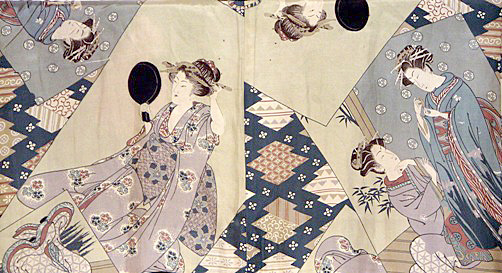
This lovely Woman’s Michiyuki also exemplifies another attribute of Japanese society…that of “miekakure” or the hidden attraction. This is a fascinating concept of the power of getting only tantalizing glimpses of something concealed. This is more apparent in the formal Haori of men with their extraordinary artwork replacing the inner back lining of the Haori…making it available to be seen only by those deemed adequate by the wearer. In this Woman’s Haori, the inner lining is very similar. The pastel colors are more than pleasing to the eye, they are reminiscent of older times when colors were considered representative of the culture and gaudy or bright colors were reserved for young children and actors on the stage. The actual design would indicate that, although married, this particular woman was concerned with the elements of beauty (“keerayee”) as the lady (“fujin”) in the design is holding up a mirror. In a very real sense, then, this inner design conveys a desire for physical beauty as well as reflects a utilitarian essence.